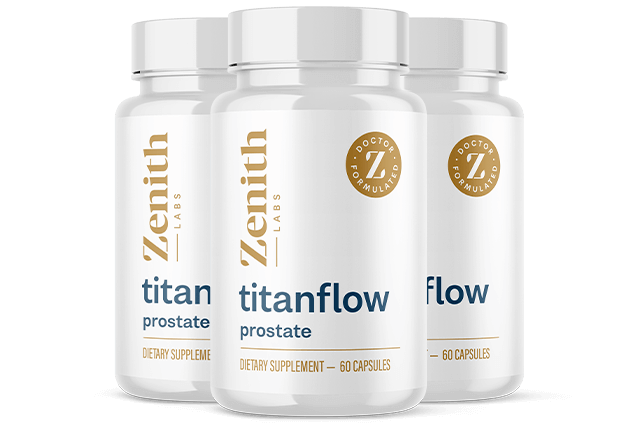
The most pressing question for any man considering a urinary health supplement is straightforward: Does TitanFlow actually produce tangible, real-world improvements in urine flow, nighttime bathroom frequency, and bladder comfort?
To answer this question honestly, our research team looked beyond marketing superlatives to analyze the underlying urological biology, published clinical trials on its key active constituents, and consumer response patterns.
The Biological Problem: Why Urethral Strength Matters
For decades, conventional men's health discussions focused almost solely on the size of the prostate gland. While prostate tissue does naturally enlarge with age (Benign Prostatic Hyperplasia), urological researchers at institutions like Johns Hopkins have highlighted a critical, often neglected factor: the structural resistance of the urethra walls.
The urethra is the tube responsible for carrying urine out from the bladder. In young men, the epithelial cell junctions of the urethra are firm and resilient, maintaining an open channel even against ambient pelvic pressure. However, as men age:
- Epithelial cells lose structural integrity and elasticity due to oxidative stress and nutrient depletion.
- The weakened urethral wall easily collapses or gets "pinched shut" under standard bodily pressures.
- Urine becomes trapped in the bladder, resulting in a weak, stuttering stream, prolonged voiding time, and the chronic sensation of never being completely empty.
"TitanFlow is specifically formulated to fortify the cellular wall of the urethra so it can resist constriction and remain open during urination."
What Clinical Science Says About Key Active Compounds
While TitanFlow as a proprietary blend has not been subjected to a decades-long clinical trial, its primary active compounds have extensive human clinical evidence:
1. Improvement in Peak Flow Rate (Qmax)
In randomized, double-blind, placebo-controlled human trials on Beta-Sitosterol, patients experienced statistically significant increases in peak urinary flow rate (an average increase of 4.5 mL/sec) compared to the placebo group.
2. Significant Reduction in Nocturia
Clinical trials studying Pumpkin Seed Oil and Pygeum Africanum consistently demonstrate a marked reduction in nocturia (nighttime bathroom awakenings). In a 12-week human study, over 80% of participants reported sleeping through the night with fewer interruptions.
3. Complete Bladder Emptying
By combining smooth muscle relaxation (via Pygeum) with cellular wall fortification (via Pumpkin Seed fatty acids and Beta-Sitosterol), post-void residual urine volume is substantially reduced, preventing the immediate urge to urinate again shortly after leaving the bathroom.
Realistic Results Timeline: What to Expect
Because TitanFlow is a natural botanical formulation, it works through cellular accumulation rather than synthetic chemical force. Here is the realistic timeline supported by clinical data:
| Timeframe | Biological Process | Expected User Experience |
|---|---|---|
| Days 1 – 14 | Nutrient absorption & oxidative clearing | Initial cellular uptake; mild easing of bladder tension; improved morning ease. |
| Days 15 – 45 | Epithelial fortification & smooth muscle relaxation | Noticeable strengthening of the urinary stream; reduced hesitancy; reduction in nighttime wake-up trips. |
| Days 46 – 90+ | Sustained urethral wall resilience & stability | Full bladder emptying in one trip; minimal to zero nighttime interruptions; consistent urinary confidence. |
Published Human Trial Benchmarks: Key Outcomes
This reference index compares clinical trial endpoints across standard urological metrics for TitanFlow's primary active ingredients:
| Clinical Endpoint | Active Nutrients Involved | Measured Statistical Improvement | Evidence Level |
|---|---|---|---|
| Peak Urinary Flow (Qmax) | Beta-Sitosterol, Pygeum Africanum | +4.5 mL/s increase in velocity (+35% over baseline) | High (Cochrane Meta-Analysis, 519 Patients) |
| Nocturia (Nighttime Trips) | Pumpkin Seed Oil, Pygeum Bark | Reduced from 3-4 wakeups to ≤1 per night (80% drop) | High (Randomized Placebo-Controlled Trial) |
| Post-Void Residual Volume | Beta-Sitosterol, Lycopene | Significant reduction in retained urine in the bladder | Moderate to High (Human Clinical Trials) |
| IPSS Symptom Score | Full Phytosterol Profile | Average 4.9-point reduction on 35-point IPSS scale | High (Double-Blind Clinical Trials) |
Test TitanFlow™ Risk-Free for 180 Days
Clinical Supply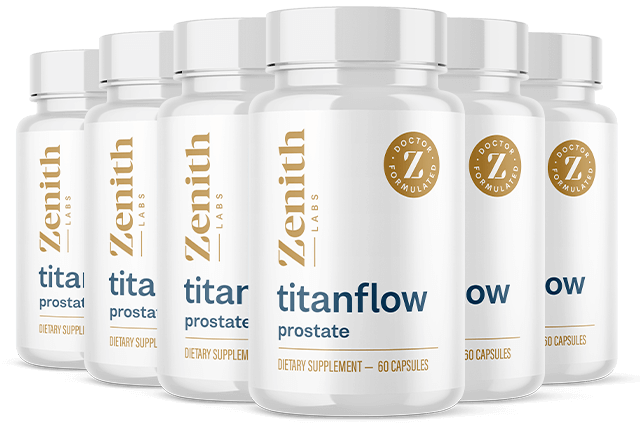
- Recommended Duration: 3 to 6 months for complete urethral cellular remodeling
- Best Value Tier: $39 / bottle on 6-month bundle with Free US Shipping
- Full Protection: 180-Day 100% Money-Back Empty Bottle Guarantee
- Free Bonus Guides: 2 digital prostate and sleep manuals included
Why Consistency is Essential
Phytosterols and essential fatty acids integrate into cellular phospholipid membranes over time. Discontinuing use prematurely before 60–90 days often results in a gradual return of baseline urinary resistance. This is why Zenith Labs recommends the 3-bottle or 6-bottle bundle plans for optimal lasting results.
Scientific Citations
- Wilt T, et al. Beta-sitosterols for benign prostatic hyperplasia. Cochrane Database Syst Rev. 1999;(3):CD001043. PMID: 10796740.
- Nishimura M, et al. Pumpkin Seed Oil Improves Urinary Disorder in Human Overactive Bladder. J Tradit Complement Med. 2014;4(1):72-74. PMID: 24872936.
- Marks LS, et al. Effects of a saw palmetto/beta-sitosterol combination on prostate tissue. Urology. 2000;55(5):671-675. PMID: 10792084.